
Outdoor kitchens have become a popular addition to homes throughout Baldwin County and the surrounding Gulf Coast. From backyard grilling areas to fully equipped outdoor entertaining spaces, homeowners are looking for ways to make their patios more functional and inviting. One feature that can make a significant difference in the overall design is the countertop.
Outdoor concrete countertops offer a customizable option for homeowners who want a surface that complements their outdoor space while providing room for food preparation, serving, and entertaining. With a wide range of finishes, colors, and design possibilities, concrete can be tailored to fit everything from a simple grill station to an expansive outdoor kitchen.
Before choosing materials for an outdoor kitchen, it helps to understand what concrete countertops offer, how they can be customized, and what considerations matter most in an outdoor environment.
Why Choose Concrete Countertops for an Outdoor Kitchen?
The countertop is one of the most frequently used features of an outdoor kitchen. It needs to provide practical workspace while fitting the style of the surrounding patio, pool deck, or backyard living area.
Concrete stands out because it offers considerable design flexibility. Rather than choosing from a limited selection of standard shapes and colors, homeowners can explore custom dimensions, edge profiles, colors, and finishes that complement their specific project.
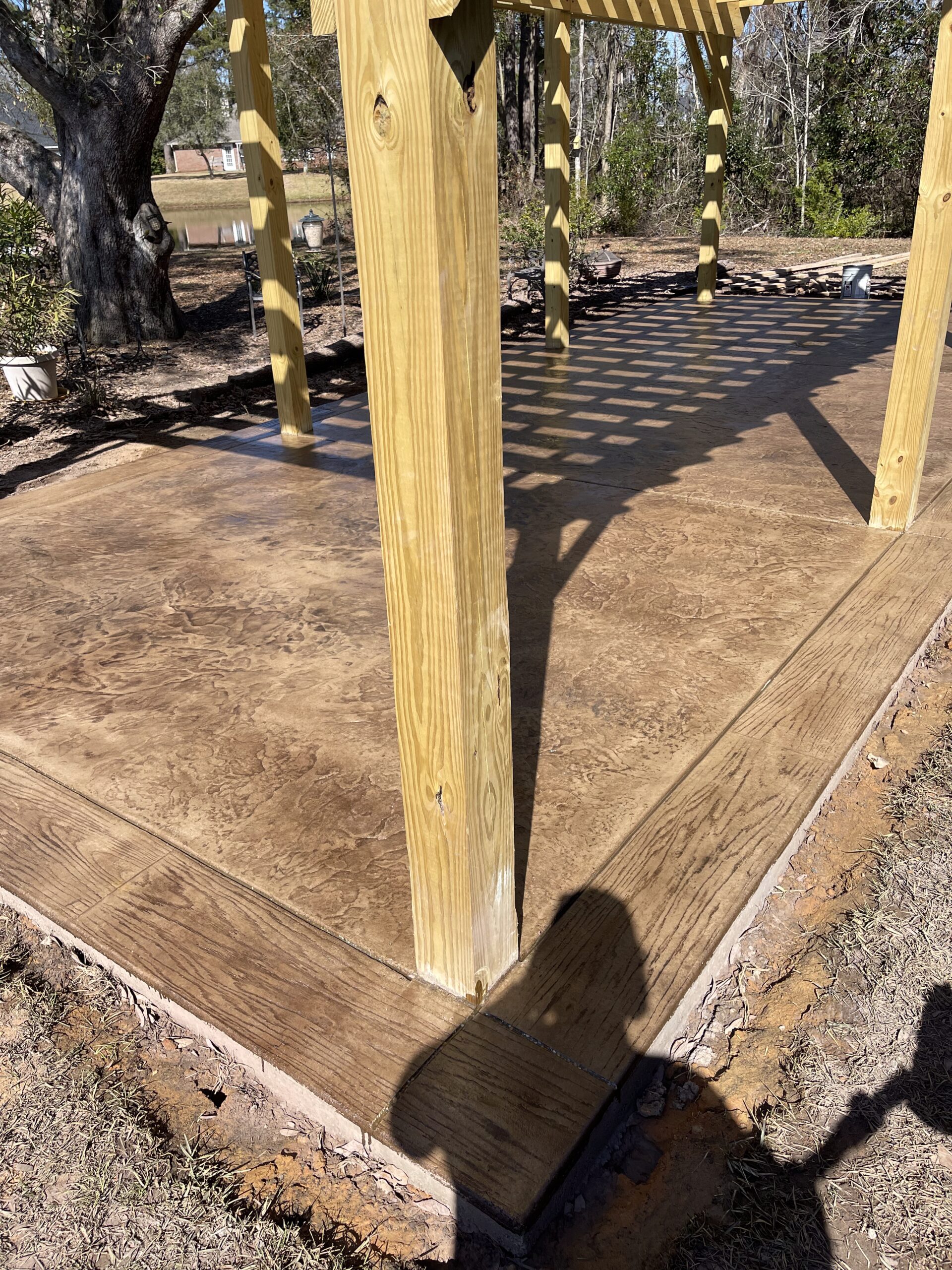
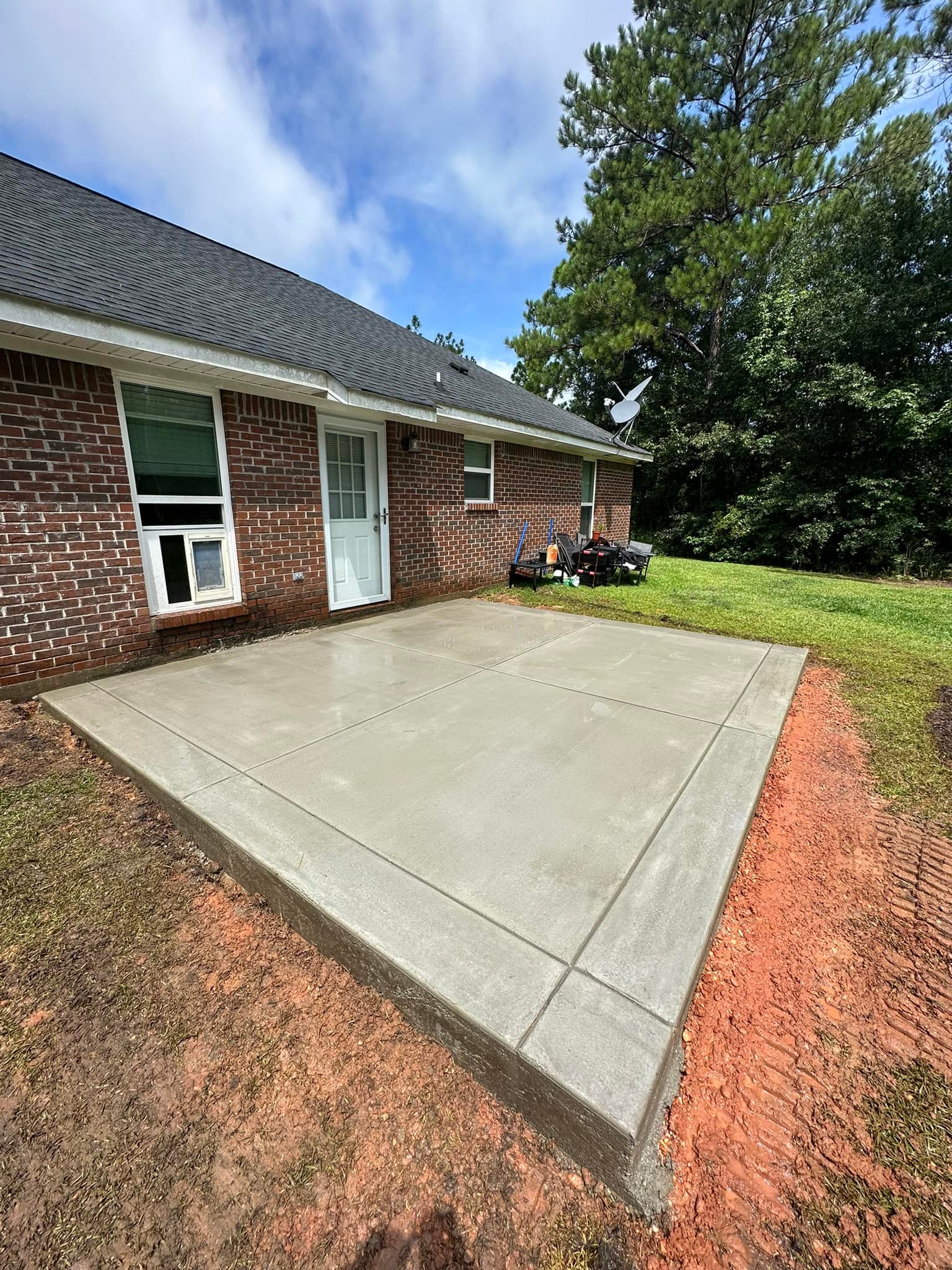
Concrete countertops can also create a cohesive look when paired with other decorative concrete features. For example, a homeowner with a stamped concrete patio may choose a countertop finish that complements the patio’s color and texture. This coordination helps the entire outdoor living space feel intentional rather than pieced together.
Concrete is also a substantial, solid material that can work well in outdoor kitchens when properly designed, installed, and maintained. The right construction methods and protective finish are important, particularly in areas exposed to frequent rain, humidity, and changing temperatures.
Customization Options for Outdoor Concrete Countertops
One of the biggest advantages of concrete is the ability to tailor the finished product to the layout and style of an outdoor kitchen. Every backyard is different, and a custom countertop can help make the best use of the available space.
Colors and Decorative Finishes
Concrete does not have to remain the traditional gray color many people picture. Depending on the design and finishing method, concrete can incorporate a range of colors and decorative effects.
Neutral shades can complement coastal homes and create a clean, understated appearance. Warmer tones can work well with natural stone, wood accents, and earthy landscaping. Darker finishes may provide contrast against lighter cabinetry or surrounding hardscape.
Decorative staining and coloring techniques can also help coordinate concrete features throughout a property. The goal is to choose a finish that complements the outdoor kitchen’s materials and the overall look of the home.
Because the final appearance can vary based on the concrete mix, application, and finishing process, discussing color samples and finish expectations before installation is an important part of planning.
Shapes, Sizes, and Layouts
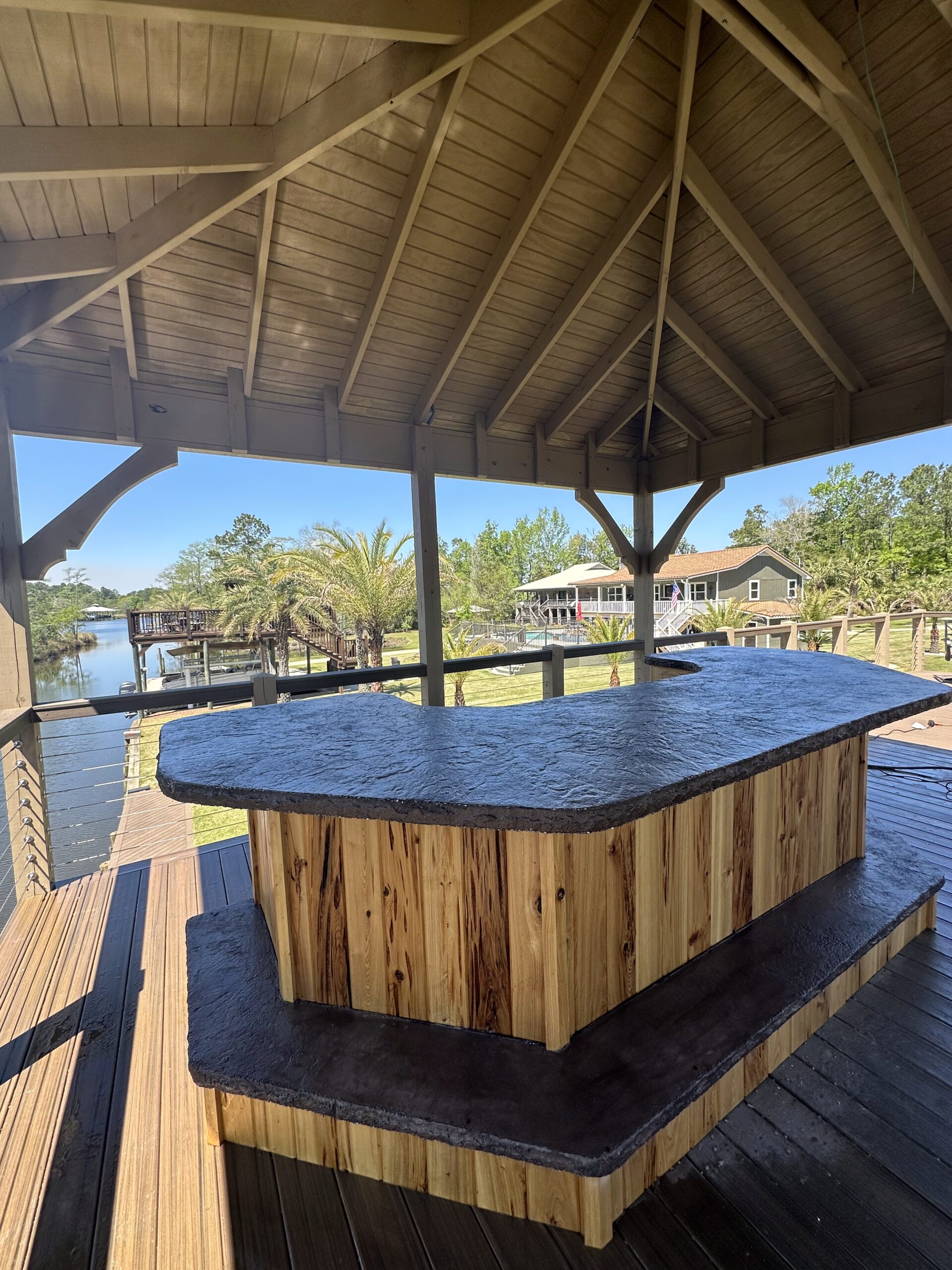
An outdoor concrete countertop can be designed around the way a homeowner plans to use the space. A compact grilling station may need only a small area for food preparation, while a larger outdoor kitchen could include extended counters for serving, seating, and entertaining.
Custom layouts can accommodate features such as built-in grills, storage areas, sinks, and designated preparation zones. Proper planning helps ensure that the countertop works with the equipment and cabinetry rather than creating awkward gaps or limited workspace.
The dimensions and thickness of the countertop should be determined with the overall design, support structure, and intended use in mind. Concrete is a substantial material, so the underlying cabinets or framework must be designed to support its weight.
Edges and Finishing Details
Small details can have a noticeable impact on the finished appearance. Edge profiles, surface textures, and the transition between the countertop and surrounding materials all contribute to the final design.
A clean, simple edge can suit a modern outdoor kitchen, while other profiles may complement a more traditional patio or rustic backyard setting. Surface finishes can also influence the visual character of the countertop.
These choices should be considered alongside practical needs, including cleaning, exposure to the elements, and compatibility with the countertop’s protective sealer.
How Outdoor Conditions Affect Concrete Countertops
Outdoor kitchens face different conditions than indoor kitchens. In coastal Alabama and other Gulf Coast communities, heat, humidity, heavy rain, and salt air can all influence how exterior materials perform over time.
Concrete countertops should be designed specifically for outdoor use rather than treated as an indoor countertop placed outside. The concrete mixture, reinforcement where appropriate, installation details, and protective finish all play a role in long-term performance.
Moisture deserves particular attention. Concrete is porous, meaning liquids can penetrate the surface if it is not properly protected. A suitable sealer can help reduce moisture absorption and make routine cleaning easier. However, sealers are not permanent barriers against every type of stain or environmental exposure, and they require maintenance.
Temperature changes and direct sunlight can also affect outdoor surfaces and their finishes. Selecting suitable materials and following recommended installation and care practices can help the countertop stand up to its intended environment.
Homeowners should also understand that concrete can develop hairline cracks or subtle variations in color and texture. These characteristics may occur naturally in concrete and do not necessarily indicate a structural problem. Proper design, installation, and maintenance help manage the risks, but no concrete surface is completely immune to change.
Keeping Outdoor Concrete Countertops Looking Their Best
Routine care is an important part of protecting an outdoor countertop. Fortunately, basic maintenance can help keep the surface clean and attractive.
For everyday cleaning, use a soft cloth or sponge with a cleaner appropriate for the countertop’s sealer. Avoid harsh chemicals, abrasive cleaning pads, and products that may damage the protective finish. Wipe up spills promptly, especially oils, acidic foods, and other substances that could stain or affect the sealer.
It is also helpful to avoid leaving standing water, food residue, or grease on the surface for extended periods. Although outdoor countertops are designed for exterior use, regular cleaning can reduce the buildup of grime and help preserve their appearance.
Sealer maintenance should follow the recommendations for the specific product used. Some finishes require more frequent attention than others, depending on the amount of sun exposure, rainfall, use, and cleaning. Periodically inspecting the surface for wear, discoloration, or areas where water absorbs more readily can help identify when maintenance may be needed.
Using cutting boards, trivets, and appropriate food preparation accessories can provide additional protection. Concrete countertops should not automatically be assumed to be heatproof or stainproof simply because they are made from concrete. The performance of the surface depends on its construction and finish.
Designing an Outdoor Kitchen That Works for Your Lifestyle
An attractive outdoor kitchen should do more than look good. It should support the way you cook, entertain, and spend time outdoors.
Before selecting a countertop, consider how many people will typically use the kitchen at once. If you frequently host gatherings, extra space for serving dishes and preparing food may be valuable. If grilling is the main activity, you may want to prioritize landing space near the grill and a convenient area for utensils and ingredients.
The relationship between the countertop and the rest of the outdoor living space matters, too. Consider how the kitchen connects to the patio, seating areas, pool deck, and walkways. A well-planned layout can make it easier for guests to move around without crowding the cooking area.
Lighting, storage, appliances, and seating should also be considered early in the process. Planning these features together helps prevent last-minute changes that could affect the countertop dimensions or placement.
Budget is another important consideration. Custom concrete countertops vary in cost depending on size, design complexity, color and finish choices, site conditions, and installation requirements. Establishing priorities early can help homeowners determine where custom details will make the biggest difference.
Pairing Concrete Countertops With Decorative Concrete Features
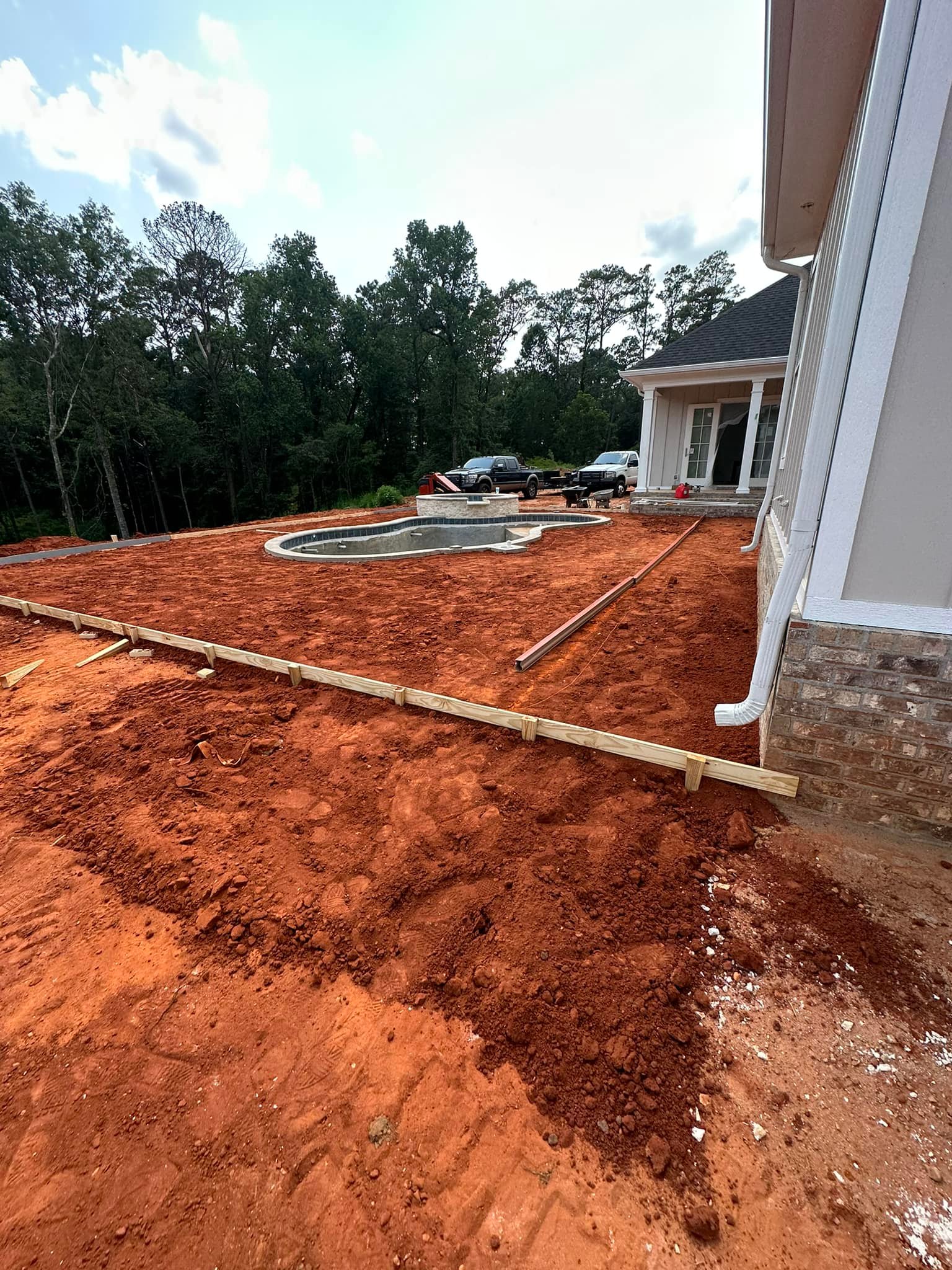
Outdoor kitchens often look their best when the surrounding hardscape complements the countertop. Decorative concrete can help create a coordinated appearance across patios, walkways, pool decks, and other outdoor surfaces.
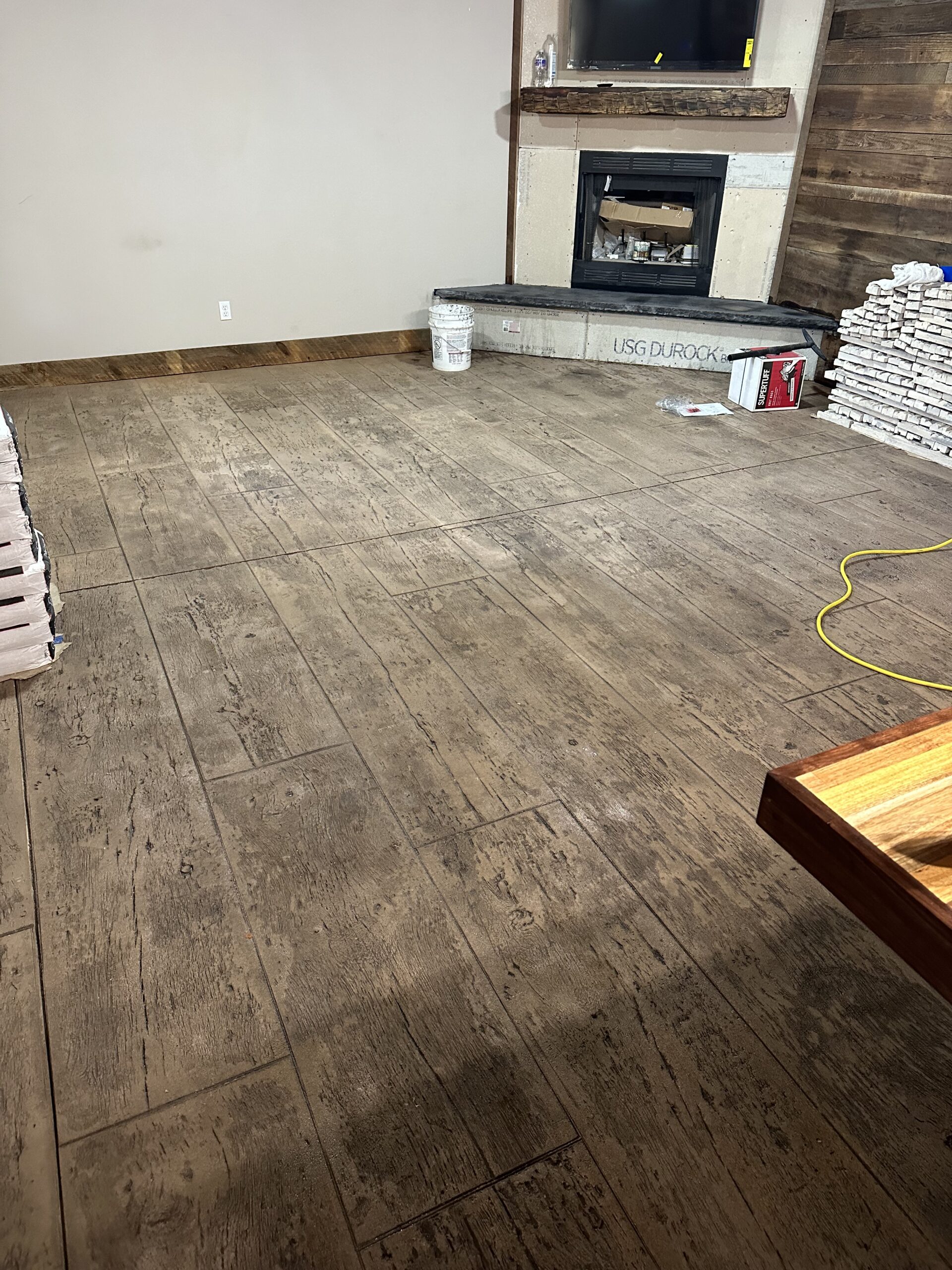
Stamped concrete can introduce patterns that resemble natural stone, brick, or other materials. Stained concrete can add color and visual depth to suitable surfaces. Depending on the project, different decorative finishes can be combined to distinguish individual areas while maintaining a consistent overall style.
For example, a homeowner might choose a warm-toned patio, a complementary countertop finish, and a defined walkway leading to the outdoor kitchen. Another design may use a more understated patio surface with a contrasting countertop to make the cooking area stand out.
The best combination depends on the home’s architecture, the surrounding landscape, and the homeowner’s preferences. Coordinating these elements during the planning stage can help create a finished space that feels connected and thoughtfully designed.
Choosing the Right Contractor for Your Outdoor Concrete Project
Custom outdoor concrete work requires attention to both appearance and performance. Before moving forward, homeowners should discuss the intended use of the countertop, the available space, the supporting structure, the desired finish, and the conditions the surface will face.
It is also important to clarify expectations for color consistency, natural variations, sealing, cleaning, and future maintenance. Reviewing examples of previous work can help homeowners understand the contractor’s approach to decorative concrete and determine whether the style fits their vision.
For outdoor kitchens, coordination with other trades may be necessary. Grills, sinks, plumbing, electrical components, cabinetry, and countertop supports all need to work together. Addressing these details early helps reduce the likelihood of costly adjustments during installation.
A well-planned project balances custom design with practical considerations. The goal is to create an outdoor kitchen that looks great, functions efficiently, and fits the needs of the property.
Bring Your Outdoor Kitchen Vision to Life With ProCon Decorative Concrete
Outdoor concrete countertops can add a distinctive finishing touch to a backyard kitchen, providing opportunities for custom colors, shapes, and decorative details. When designed for outdoor conditions and properly maintained, they can become an attractive part of a larger outdoor living space.
For homeowners in Foley, Baldwin County, and the surrounding Gulf Coast, planning the countertop alongside the patio and other concrete features can help create a more cohesive result. From the overall layout to the finishing details, each decision contributes to the appearance and usability of the finished space.
ProCon Decorative Concrete LLC works with homeowners to bring decorative concrete projects to life, with options for patios, pool decks, slabs, countertops, and other custom concrete features. If you are planning an outdoor kitchen or updating your backyard entertaining area, contact ProCon to discuss your project and explore the possibilities for your space.