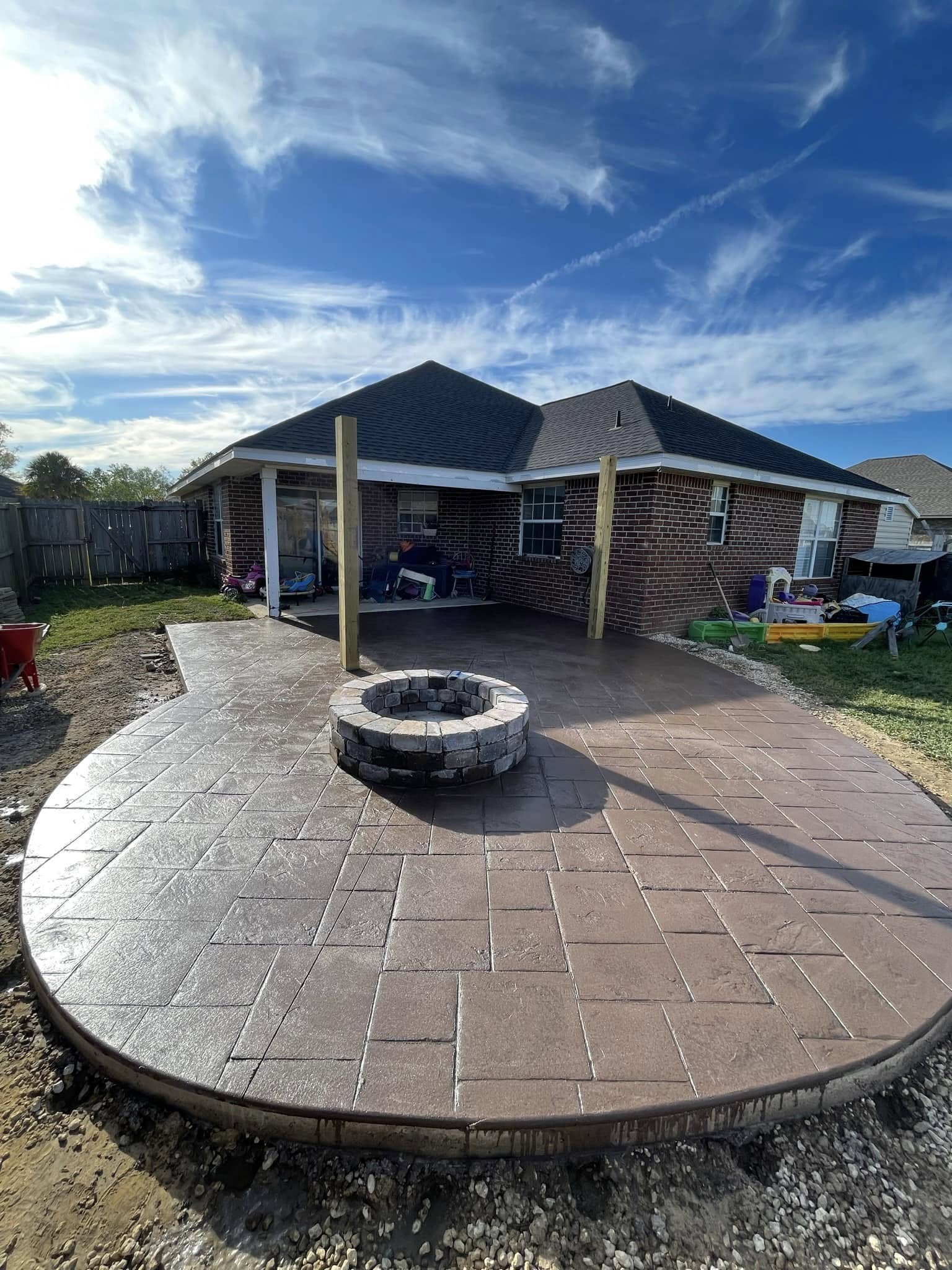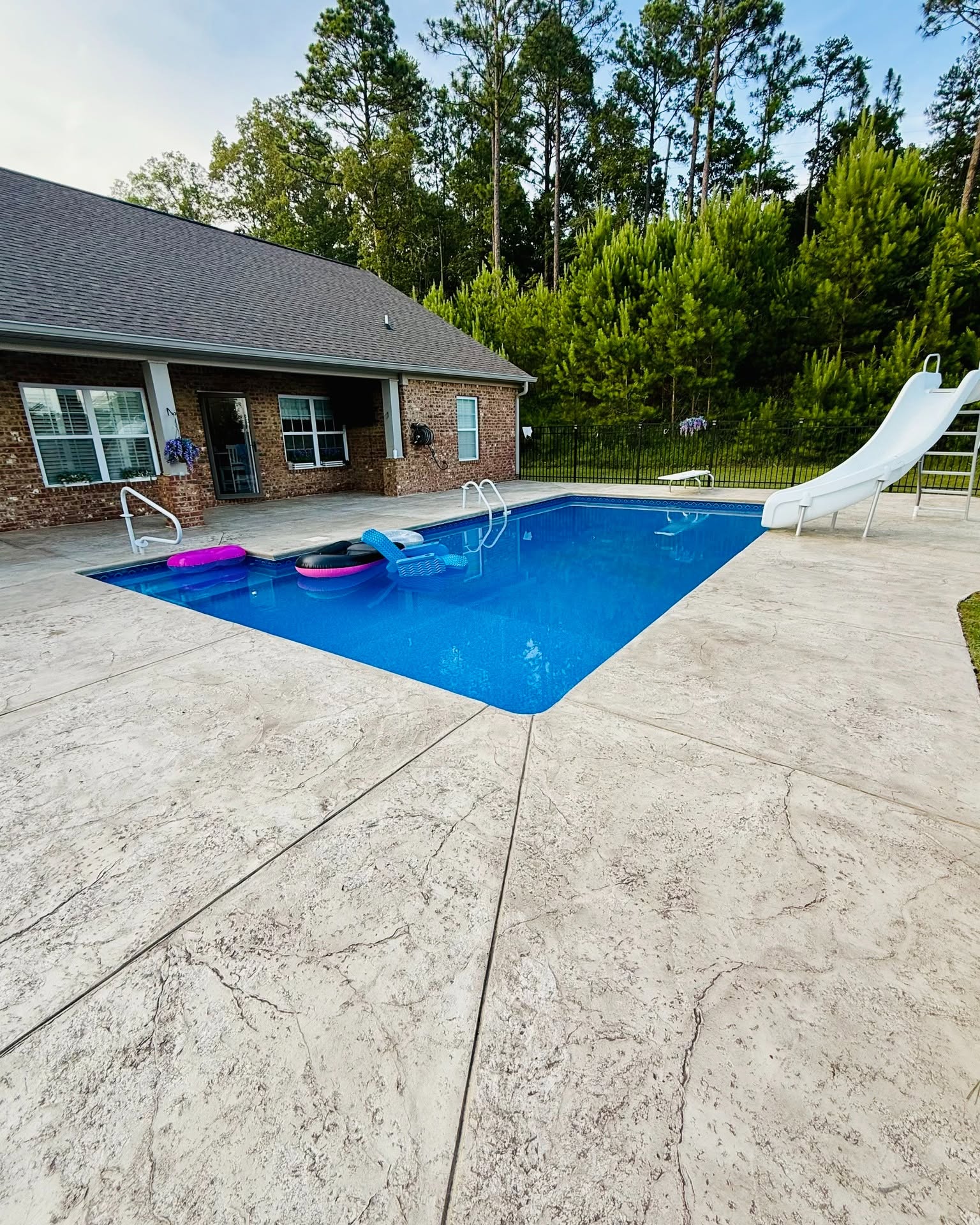

Decorative concrete can transform an ordinary slab into an attractive, functional surface for a patio, pool deck, outdoor kitchen, walkway, or other residential space. From stained concrete to decorative overlays and protective coatings, there are several ways to improve the appearance of existing concrete or create a custom finish for a new project.
However, the finished appearance is only part of what makes a concrete project successful. One of the most important steps happens before the decorative finish is ever applied: surface preparation.
Proper concrete surface preparation helps create the conditions needed for coatings, overlays, and other decorative treatments to bond effectively to the existing surface. Without the appropriate preparation, even a high quality product may not perform as intended. Peeling, uneven coloring, bubbling, and premature wear can sometimes be traced back to problems that occurred before the finishing material was applied.
For homeowners considering decorative concrete in Foley, Gulf Shores, Orange Beach, or elsewhere in Baldwin County, understanding this process can help you make informed decisions when choosing a contractor and planning your project.
What Is Concrete Surface Preparation?
Concrete surface preparation is the process of evaluating, cleaning, and conditioning a concrete surface before applying a new finish or treatment.
The exact preparation process depends on the condition of the concrete, the type of decorative finish being installed, and the manufacturer’s requirements for the products being used.
For example, preparing a patio for a decorative overlay may involve different steps than preparing a slab for a coating. Concrete that has previously been painted or sealed may also require additional work to remove materials that could interfere with the new application.
The goal is to create a suitable surface for the chosen system. This may involve removing dirt, grease, loose material, old coatings, or other contaminants. Depending on the project, mechanical grinding or other methods may be necessary to establish the appropriate surface texture.
Surface preparation also gives the contractor an opportunity to evaluate the existing concrete and identify conditions that could affect the finished result.
Why Does Surface Preparation Matter?
Decorative concrete products are designed to work with properly prepared surfaces. If the existing slab contains contaminants, loose material, incompatible coatings, or other problems, the new finish may not adhere as expected.
Even when a newly finished surface looks excellent at first, inadequate preparation can contribute to performance issues that develop later.
Proper Adhesion
Adhesion is one of the most important considerations when applying a coating or overlay to concrete. The new material must be compatible with the existing surface and able to bond according to the product’s specifications.
Dirt, oil, grease, old sealers, and failing coatings can interfere with that bond. Simply applying a new material over a dirty or unsuitable surface does not correct the underlying problem.
The appropriate cleaning and preparation method helps remove these barriers and establishes the surface conditions needed for the selected product.
A More Consistent Appearance
Decorative finishes are often chosen for their color, texture, and overall visual appeal. However, the condition of the underlying concrete can affect how consistently a finish looks once it is installed.
Uneven porosity, leftover contaminants, and inconsistent surface conditions may contribute to variations in color or appearance. While some decorative techniques intentionally create variation, unwanted inconsistencies can make the finished project look different from what the homeowner expected.
Preparing the concrete properly helps create a more suitable foundation for achieving the intended appearance.
Improved Durability
No concrete coating, stain, or overlay is completely maintenance free or guaranteed to last forever. Performance depends on the product, installation conditions, exposure, maintenance, and condition of the underlying slab.
Still, appropriate preparation is an important part of giving the chosen system a fair opportunity to perform as designed.
When preparation is overlooked, the result may be a finish that requires repairs or replacement sooner than expected. Investing in the correct process from the beginning can help reduce avoidable problems.
The Concrete Surface Preparation Process
Every concrete project is different, so preparation should be based on the specific surface and finish rather than a one size fits all approach.
Step One: Evaluate the Existing Concrete
Before work begins, the contractor should examine the existing concrete and determine whether it is suitable for the proposed finish.
This evaluation may include checking for cracks, loose or deteriorating areas, old coatings, visible contamination, moisture concerns, and uneven sections. The contractor should also consider how the surface will be used and the conditions it will face.
For example, an outdoor pool deck has different requirements from an interior decorative concrete floor. A surface exposed to direct sunlight, rain, standing water, and regular foot traffic must be evaluated with those conditions in mind.
Identifying concerns early helps determine whether additional repairs or preparation steps are needed before the decorative work begins.
Step Two: Remove Dirt and Contaminants
Concrete surfaces can accumulate dirt, dust, oil, grease, mildew, and residue from previous treatments. These materials may prevent a new product from bonding properly or interfere with the final appearance.
Cleaning removes contaminants that could compromise the installation. The appropriate method depends on what is present on the surface and the requirements of the finishing system.
It is important to understand that cleaning alone does not always provide adequate preparation. Some coatings, sealers, and other materials may require mechanical removal or additional surface treatment.
The contractor must determine what is necessary rather than assuming that a quick wash will be sufficient for every project.
Step Three: Remove Unsuitable Coatings or Material
If the concrete has an old coating, paint, sealer, or failing decorative finish, that material may need to be removed before a new system can be installed.
Applying a new coating over an incompatible or deteriorating layer can create problems because the new finish depends on the condition of the material beneath it.
Mechanical grinding or another approved removal method may be appropriate, depending on the existing material and the planned finish.
Not every old treatment must automatically be removed in every situation. Compatibility and manufacturer instructions matter. The important consideration is ensuring that the existing surface will support the new application.
Step Four: Establish the Appropriate Surface Profile
Some decorative concrete systems require a particular degree of surface texture to promote adhesion. This is often called the concrete surface profile.
Mechanical grinding and other preparation techniques can help establish the texture required for the chosen product.
The correct profile varies by application. A surface prepared for one type of coating may not be suitable for another. Too little preparation can leave the surface too smooth, while inappropriate or excessive preparation may create additional work or affect the final appearance.
Following the product manufacturer’s requirements is essential when selecting the preparation method.
Step Five: Address Cracks and Other Surface Concerns
Existing cracks, damaged edges, spalling, and uneven areas should be evaluated before the decorative finish is applied.
Some minor imperfections may be suitable for repair, while other conditions may indicate a more significant problem. Active movement, settlement, or structural concerns require careful consideration because a decorative finish alone will not resolve the underlying cause.
Repairs must also be compatible with the finishing system. Different products have different limitations, and not every crack can be made permanently invisible.
Discussing these conditions before installation helps establish realistic expectations about the final appearance and the performance of the finished surface.
Step Six: Check Moisture and Environmental Conditions
Moisture can affect the installation and performance of certain concrete coatings and overlays. The amount of moisture present, the condition of the slab, and the type of product being used all influence the appropriate approach.
Some systems require moisture testing or specific moisture limits before installation. Temperature, humidity, ventilation, and curing conditions may also affect application.
These considerations are especially important for exterior projects in coastal Alabama, where weather conditions can change quickly.
A qualified contractor should follow the requirements of the chosen system and avoid rushing an application when environmental conditions are unsuitable.
Step Seven: Apply the Decorative Finish
Once the surface has been properly prepared and any necessary repairs have been completed, the decorative application can begin.
Depending on the project, this may involve concrete staining, a decorative overlay, a coating, or another finishing method.
Each system has its own installation requirements, including mixing, application thickness, curing time, and any recommended protective sealer.
Following those instructions helps support the appearance and performance of the finished project. Preparation is a major part of the process, but correct application and curing matter just as much.
Common Surface Preparation Mistakes to Avoid
One common mistake is assuming that concrete is ready for a new finish simply because it looks clean. A slab may appear clean while still containing residue, old sealer, or other contaminants that affect adhesion.
Another mistake is applying a new coating over a failing previous finish without evaluating whether the existing material can support the new application. If the old coating separates from the concrete, the new material applied over it may fail along with it.
Skipping necessary repairs can also create problems. Decorative finishes improve appearance, but they do not automatically correct settlement, movement, or other underlying issues.
Rushing the process is another concern. Preparation, application, and curing all require appropriate conditions and sufficient time. Trying to complete the project before the surface is ready can compromise the result.
Finally, using the same preparation method for every concrete project can lead to avoidable problems. The correct process depends on the existing slab and the product being installed.
Why Coastal Alabama Conditions Deserve Special Attention
Homeowners in Foley, Gulf Shores, Orange Beach, and surrounding communities often have concrete surfaces exposed to a combination of intense sunlight, rain, humidity, and regular outdoor use.
These conditions make proper planning especially important for patios, pool decks, walkways, and other exterior concrete projects.
Humidity and rain can affect drying and curing conditions. Sun exposure can influence surface temperatures during application. Water exposure and the condition of the existing slab can also affect which decorative system is appropriate.
Coastal properties may have additional site considerations, including soil conditions, drainage patterns, and the way water moves around the home. These factors should be evaluated when relevant to the project.
There is no single decorative concrete product that is automatically best for every coastal property. Choosing an appropriate system requires considering the intended use, the condition of the concrete, exposure conditions, and the manufacturer’s installation requirements.
Proper preparation helps address the needs of the individual project rather than relying on a generic process.
How to Choose a Decorative Concrete Contractor
When comparing concrete contractors, homeowners often focus on color choices, patterns, pricing, and photographs of completed work. Those are important considerations, but it is also worth asking how the contractor approaches preparation.
Ask how the existing concrete will be evaluated, whether old coatings or sealers need to be removed, and how cracks or deteriorated areas will be handled. You can also ask which decorative system is recommended for your particular surface and why.
A contractor should be able to explain the preparation process in terms you understand and discuss any limitations that may affect the finished appearance.
It is also helpful to ask about maintenance requirements, expected curing time, and how the finished surface should be cared for after installation.
Understanding these details can help you compare proposals more accurately. Two estimates may include similar decorative finishes while allowing for very different levels of preparation.
The lowest price does not necessarily represent the best value if important preparation steps are excluded.
Is Proper Preparation Worth the Investment?
Surface preparation may not be the most visually exciting part of a decorative concrete project, but it is one of the most important steps in achieving a successful result.
The finished color, texture, and design receive the most attention because they are what people see every day. However, the work completed before those details are added plays a major role in establishing the conditions needed for the new finish.
Taking time to evaluate the slab, remove contaminants, address surface concerns, and follow the manufacturer’s requirements can help reduce avoidable installation problems.
The right preparation process also helps ensure that the selected decorative system is appropriate for the existing concrete and the property’s intended use.
For homeowners planning a new patio, pool deck, concrete coating, or decorative overlay, understanding the preparation process is a useful starting point for making informed decisions.
Transform Your Concrete with ProCon Decorative Concrete LLC
If you are considering a decorative concrete project in Foley, Gulf Shores, Orange Beach, or the surrounding Baldwin County area, ProCon Decorative Concrete LLC can help you explore options for improving your concrete surfaces.
From decorative finishes and staining to overlays, pool decks, patios, and other concrete applications, choosing the right approach begins with understanding your property’s needs.
Before deciding on a finish, consider the condition of your existing concrete, how the area will be used, and what you want the completed space to look like.
Contact ProCon Decorative Concrete LLC to discuss your project and learn more about the available options for your home.